Monday, June 24, 2013

EDITORIAL - Bharti Kher's Moral Agitation and Reality of Indian Art Scene and more

EDITORIAL


Bharti Kher’s Moral Agitation and the Reality of Indian Art Scene
(Bharti Kher)
India does not feature at the 55th Venice Biennale. In 2011, Lalit Kala Akademi had taken initiative to have an India Pavilion there and as all of us know Ranjit Hoskote was the curator of our National Pavilion in Venice. This year we are not there. Noted artist Bharti Kher laments that Indian bureaucratic apathy is the reason behind this lack of participation. Kher finds it difficult to digest the fact that smaller, poorer and war worn countries are there in the 55th edition. She concludes her complaint or rather outrage by accepting that art cannot change the world. “But we cannot escape apathy and indifference and I am not talking about politics, I am talking about love,” is the last line from Bharti Kher. A few important art people have responded to it (for details read www.altgaze.com). While agreeing with Kher, some of them suggest that they should form a union of artists and art workers (my interpretation) and force the government agencies to take responsibility. Some of them say that they should pick and choose a few important people (read Kiran Nadar, Lekha Poddar, Peter Nagy and so on) and make them chalk out the future action. Some say, ‘just forget it’. Though critical in many points I think such initiatives are the need of the time. But the complexion of it should be different. Why? Read on.
( Lalit Kala Akademi)
I like and understand Bharti Kher’s moral agitation. But I strongly believe that it is a bit anachronistic. The demand for India’s aggressive participation in International cultural forums like Venice Biennale and the critique on bureaucratic apathy should have come from an artist like Bharti Kher at least five years back, to be precise when our art market was booming. Today, when all the private agencies (read galleries) have proved themselves to be spent forces and behave like small time businessmen from pavements, why we suddenly feel the need for government support? Doesn’t it sound like what Vijay Mallya had in his mind when his air traffic business went bust? See, I have done my best, I made air travel an experience, I handpicked the air-hostesses  I made wonderful calendars and I even gave you take away stuff. Now I don’t have money to give your freebies. Why doesn’t the national coffer loosen up a bit and revive my business? The business tycoon seems to say. The artists who have enjoyed all the facilities of private enterprises and business houses during the boom years now simply say that the same should be provided by the government, not only to themselves but also to all the art business houses.
(Ranjit Hoskote)
Let’s us go for a reality check. The Lalit Kala Akademi, which is responsible for lobbying and facilitating international participations, has been doing it even during and before the boom years. Did anyone care to ask about the quality of such programs? Everyone approved the Indian Pavilion in the 54th Biennale because it was curated by Ranjit Hoskote, who has made no sense to the contemporary art scene (or has made sense to everything of Indian contemporary art from Sabawala to Gond Art, from Gobhai to Tanmoy Samanta) despite his self appointed role as a ‘cultural theorist’. The approval came or eked out only because Hoskote had become an essential ingredient in the international cultural packages from India. Anybody who disputes me should disprove me with five cultural theoretical propositions forwarded by Hoskote, based on Indian contemporary art, which have changed the art scene of our country the way Foucault’s or Agamben’s ideas changed the cultural world. We all know how Hoskote was pushed into a soup in Venice when he faced the real bureaucracy. Did he have the guts to criticise the cultural magnets of this country after he came back from Venice and brought out the issue in public? 

(Indira Gandhi National Centre for Arts)
There a stone’s throw away from Lalit Kala Akademi you see Indira Gandhi National Centre for Arts (IGNCA) and on the other side Azad Bhavan with the Indian Council for Cultural Relations (ICCR), two agencies with a lot of funds to make anything happen in the field of culture. In IGNCA things happen but nobody comes to know. Taking the help of the ICCR many people go around the world. The mainstreamers who criticize government now used to consider those people who have any connection with the IGNCA or ICCR just B and C grade artists who are ready to ‘do anything’ for a free ticket. Why didn’t these people intervene and facilitate a change when money was pouring in the art scene a few years back? Were they too busy to think about the cultural importance of their country? 

One of the respondents (to Bharti Kher’s letter) speaks about forming an organisation of artists, a sort of union. Union is always formed by those people who are socially and economically and even politically weak. They form unions to wrench their rights from power centres. That means, when boom was around artists and other art players were not weak. Now they are weak so they want organisations and unions. None ask this question, why only the lack of participation in Venice Biennale raises such hue and cry. Why none thought of forming a union of artists for helping out those artists who have been deprived of the benefits of economic boom? So we have to see this idea of forming a union with a bit of suspicion. This union will not be for the benefit of a larger art public but will be a conglomerate to push their business plans over the government’s shoulders. Some even suggest that instead of talking about Venice, we should be supporting our Kochi-Muziris Biennale. I would warn them that before getting into such an act ask the KMB trustees to come out clean in public regarding the expenditure of public money. If they are clean, I will be at the forefront to support KMB as an alternative to the world art scene.

Finally, I am fascinated by Bharti Kher’s last sentence in the letter. She says, ‘I am not talking about politics, but I am talking about love’. Does something ring familiar? Kher takes a Lennon-esque or Beatles-esque stance, ‘No War Make Love’, a slogan that had moved all the romantics. Where political reality and its analysis fail wishful thinking in the form of romance occurs. Bharti Kher makes it clear. She says, I am not talking about politics. But about love. She does not want to go into the deeper issues because she herself believes that art is incapable of bringing about a social change. But she forgets that an artist of her fame and fortune could bring about changes provided her statements are made in full integrity and sincerity. But when one does that, one has to confront the political realities. One cannot extract ‘political or politics’ out of it. One has to leave the creature comforts and come out in public. One has to take responsibility and fight it out till the end. Otherwise such lamentations will remain in web space and yes, a few would definitely respond.

JohnyML

NEWS

Broken Clouds of Innocence


(a charcoal work by Kanchanmala Ghosh)
The Academy of Fine Arts, Kolkata presents a solo show of exquisite works of artist Kanchanmala Ghosh. The works on display are her recent charcoals and acrylic on canvas collection.

Kolkata based Kanchanmala, is an Academy of Fine Arts graduate, and has had several group and solo exhibitions in and around the country.

Kanchanmala’s works in her recent show display a mix of intense portraits and melancholy landscapes which arrest the viewer’s attention. Her near monochromatic palette and rare use of mild colours gives an intense hypnotic look to the works.

The show titled, Broken Clouds, draws the attention of the viewer to the innocence of the faces, mostly of young children, and the attempt to capture their emotion through the works. The landscapes appear to depict the onset of monsoon and the waiting felt by the earth in anticipation of a cooling rain shower on the summer earth.

The show is on view till the 26th of June 2013.


Vibration - An Art Exhibition


Karnataka Chitrakala Parishat, Bangalore, presents a show of art works by a group of upcoming and new comer artists along with established artists from the country. The show titled, ‘Vibration - An Art Exhibition’ will preview on the 24th of June 2013 at 6:00 pm and is on display till the 26th of June 2013.

The show is curated by artist, curator Vishal Sharma and the participating artists are, Juhi Shukla, Kishan Soni, Madhu Rriya, Manoj Singh, Monika Saroch, Mustajab Shelle, Navkas Sharma, Nikhil Shkdev Giri, Raj Kumar Singh, Rajeev Kumar Gupta, Runa Shelina Banu, Sandeep Shakya, Sanjay Chandeliya, Shweta Agarwal, Suhani Jain and Vishal Sharma. 

The show displays an eclectic mix of style, and genre of artworks, rendered in a variety of mediums. For further information about the show, please call on +91 9691191173/ 9808123173.


The Nadbramha show

( 'Sprout' - a print by Sujit Giram)
The Hirji Jehangir Art Gallery, Mumbai presents a group show a group show of art works by four upcoming artists and print makers of the country. 

The participating artists and print makers are Pravin Mukhekar, Sujit Giram, Seema Gondane and Shrikant Dahiwal. 

The works on display are in the form of paintings, in acrylic and oils on canvas, depicting various scenarios of childhood and youth, prints which deal with the regeneration and sprouting of creative pursuits and ideas, generated by the idle mind delicate and intricately designed. The drawings on display, mostly rendered in pencil an ink or charcoals exude a plethora of known and recognizable to unknown forms which blend on paper effortlessly.

The show resonates as the name suggests the deep rooted thoughts and expression of the artists as an interaction with the world around and inside them.

The show is on view till the 24th of June 2013.


Artist-run Spaces Symposium


Asia Art Archive and Para Site co-present a symposium titled ‘Parallel, Alternative, or Historically Particular?  - Roundtable on Archiving Artist-run Spaces‘ on the  28 June 2013, 6:00-8:00 pm at A Space, Asia Art Archive, Hong Kong
This roundtable is part of an ongoing and shared enquiry into the contextual framework of how artist-run spaces are being archived and historicised. Core discussants will include practitioners from the region currently working with AAA to archive artist-run space projects, as well as a number of local practitioners/artist-space founders and members from the AAA research team.
Through dialogue and conversation, this roundtable will address issues around the urgency of archiving artist-run spaces, what is being archived, and what gets lost in projects of narrativising and archiving, as well as implications of these archiving projects on how artist-run spaces are being historicised. The discussion will span various contexts from specific strategies to common challenges. It will be an opportunity to share ideas and approaches among practitioners.

Alongside the roundtable, AAA will showcase a variety of publications in its library on the topic, inviting a closer examination of the diverse approaches to archiving artist-run spaces in Asia. The event will also mark the soft launch of the digitized archival collections of two pioneering alternative art spaces in Vietnam – Salon Natasha (Hanoi) and Blue Space Contemporary Arts Center (Ho Chi Minh City) – on its digital platform.

Moderated by Linda Lai, Artist and Associate Professor, School of Creative Media, City University of Hong Kong, the core discussants include Ringo Bunoan, Zoe Butt, Janet Chan, Choi Yan-chi, Claire Hsu, Natasha Kraevskaia, Leung Chi-wo, Qinyi Lim, Hammad Nasar, Ellen Pau, Nora Taylor, Arlette Quynh-Anh Tran.


 (News reports by Sushma Sabnis)


Saturday, June 22, 2013

Serious Photography, The Art Market, Paul Fernandes Retrospective and more

NEWS


Open Call for Research Fellowship 2013

Delfina Foundation is inviting applicants from India and Turkey for the Research Fellowship 2013, which is in partnership with Iniva (Institute of International Visual Arts) and Goldsmiths College’s Department of Visual Cultures and the PhD Program in Curatorial/Knowledge.
The Foundation for Indian Contemporary Art (FICA) is supporting a research fellow from India to be in residence alongside a participant from Turkey supported by SAHA. Indian participants should apply directly to FICA.The Research Fellowship 2013 aims to provide an opportunity for intensive research in the field of visual culture by curators and researchers who have an innovative visual culture project, and who might benefit from the research and curatorial work that is being done by the fellowship's partner institutions in London. Artists are welcome to apply; however this residency is largely focused on the development of critical-curatorial discourse, not singularly on artistic practice. 
The 2013 recipients will receive:
A 10-12 week residency (late September/October to December) in London, including one economy return flight to London, a bursary for per diems and basic living costs, and accommodation. Please note that final dates will be confirmed with the selected applicants.

Access to attend Goldsmith’s post-graduate courses and the Curatorial/Knowledge seminars

Access to the Iniva’s Stuart Hall Library and Archive

An opportunity to assist with Iniva and Delfina Foundation’s programming

Goldsmiths, Iniva and Delfina Foundation will provide an important platform to the recipient scholar to meet fellow research scholars, artists and a network of professionals in the field of contemporary art in London

For application details and any further information, interested applicants can visit the FICA website: http://www.ficart.org/Programs_Awards3_2013.html 

The closing date for applications is the 15th of July 2013, 5:00pm.


Talk On Art Practices

(a painting by Kate Javens)
Gallery Five Forty Five of Bangalore brings a new perspective on various art practices by artists outside of India, in an interactive talk session with two American artists, Kate Javens and Sheila Kramer.

The talk is to take place on the 28th of June 2013, from 5 30 pm to 7:00 pm

Kate Javens, lives and works in New York and is an artist with a long tradition of painting animal subjects, using them to personify unsung heroes in American history. The artist will show an image history of her work with special emphasis on a recent NYC Harlem series, including the blessings of elephants from her trip to India with the Brearley School. 


Sheila Kramer is a painter who translates her memories of the land, sea and sky into hovering presences of light and forms through vibrant colors. Her work is inspired by the landscape of Ireland, Northern Europe, her childhood home in Iowa, and the skies of New York City. She will present a fifteen minute talk discussing how her life as a painter, aviator and teacher are intertwined. The talk will include a short flying video along with images of her paintings from Ireland, England, Costa Rica and New York City. 


Retrospective - Paul Fernandes
(Paul Fernandes)
Urban Solace -  Cafe for the Soul, Bangalore, presents a solo show of an entire collection of paintings by eminent artist, cartoonist, illustrator, Paul Fernandes. The collection comprises a whopping fifty nine water colour prints, which barely touch the tip of the iceberg as far as the artist’s large body of work is concerned. 

Documenting a city, he loves and fondly reminisces about, the works capture all the little nuances of the laid back city over the decades which the artist has skillfully painted in his precise illustrations.

Urban Solace Gallery in its attempt to bring to the fore for the very first time such a comprehensive retrospective of the eminent artist, succeeds in delivering to the viewer a lost part of culture of the city of Bangalore, the city’s soul through a human hand.

The show is on view till the 23rd of June 2013.


The Art Market 
(The Art Market)
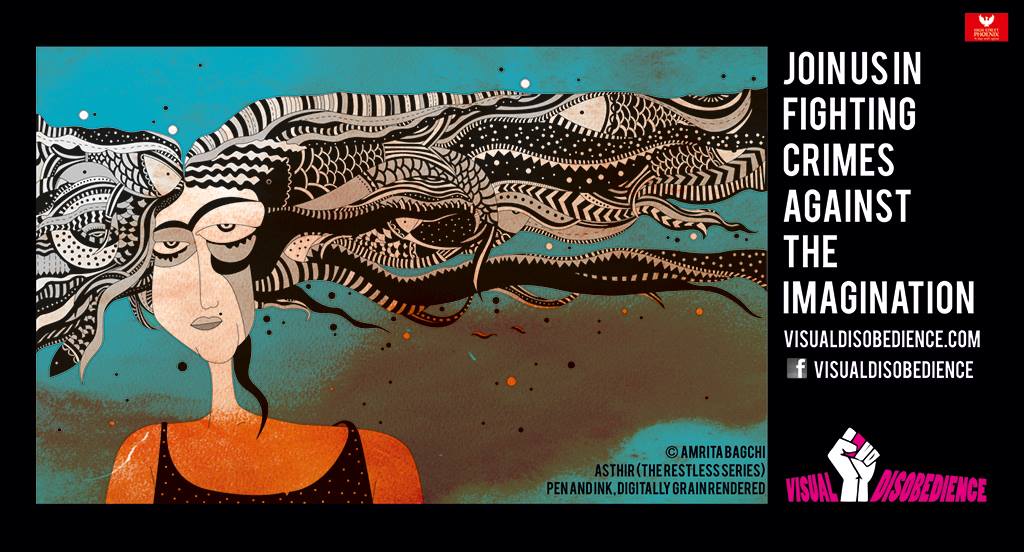
Visual Disobedience, Mumbai, an artists community dedicated to bring forth young and quirky works of art by smart young artists with the sole belief that art is every one’s birth right and not exclusive for a niche crowd, presents ‘The Art Market’. The Art Market is a concerted effort to break all barriers and social conditioning and freeing art from its imposed intellectual shackles.

The Art Market is a canopy for a number of activities where artists of all kinds can come and interact, sell their works, present their music and performances to a wide range of viewers and interested enthusiasts. With an intent to consume, enjoy and buy art, the Art Market acts as a meeting place of the creatives from all sections of society.

Visual Disobedience artists will put up stalls selling their works - an intimate show where one can interact with the artist, before buying the art. The artists participating in the show are Mira Malhotra, Vandhana Rajan Swamy, Amrita Bagchi, Vikrant Shitole, Jai Ranjit, Priyesh Trivedi, Raj Chettiyar, Avantika Mathur. 

Along with visual arts, are stand up comedians Aditya Desai, Sonali Thakkar, Siddharth Dudeja, Angad Ranyal along with performances from singer-songwriter, Bone Broke aka Dinkar Dwivedi

The Art Market is to be held at WTF, Versova, Mumbai on the 23rd June 2013.
Call +91 9769930240 for further details.


(News reports by Sushma Sabnis)

FEATURE
What Are You Saying?
Photographer Prashant Panjiar says serious photographers have to concentrate on what they are saying in the picture
(Photo by Prashant Panjiar)
Photojournalist and independent photographer Prashant Panjiar, who is about to teach a Travelling Lens master class photography workshop with Palani Mohan in Ladakh, says serious photography is about more than technique.
“The master class is about helping people think about the process of making images. It’s about how one can immerse oneself in a place or subject and come up with one’s own experience of that event,” says Prashant, co-founder and managing trustee of Nazar Foundation, a non-profit trust for the promotion of the photographic arts. He is also the co-founder and one of the creative directors of the Delhi Photo Festival.
Prashant has decades of experience in many kinds of photography including photojournalism, India Today, Outlook documentary photography and gathering images for non-profit organizations. But instead of restricting himself, he prefers simply to be known as a photographer.
“It’s just a means of expression for me, like some people write and others make music.” The only distinction he makes between all these fields is that of time.
“I have worked on many projects as a photojournalist in a magazine and the only difference in approach is that with documentary projects, one has the time to watch the events unfold. Whereas photojournalism requires quick stories where one has to photograph as the events unfold,” explains Prashant.
“I have had both experiences and I continue to be a photojournalist, but I spend most of my time on longer projects because of the leisure of time and the creative process is different.”
The creative process though, he says, is never about technique. “It’s about what you understand and how much or what you see. To be a good photographer, it is important to keep in mind what is being said in the picture.”
Photography today, he observes, has been democratized to a large extent, by virtue of anybody being able to take a picture. “Unfortunately, with democratization there’s also a dumbing down happening all over the world and in India. Serious photographers, therefore have to distinguish themselves from people who capture memories or record events. They have to realize this and be critical of their works because getting likes on Facebook is not enough.”
(Prasahnt Panjiar)
This is even more true for self-taught photographers, like Prashant, who learnt by studying the works of photographers such as Raghu Rai.
“I learnt from my contemporaries and by studying photographers from all over the world, many of them greats from the 20 century.”
His biggest learnings were from his experiences witnessing conflicts across the country, from the Naxalite movement in 1977-78 to the communal riots in Bagalpur and Bombay and the Babri Masjid demolition.
“They not only informed my photography, but also the way I look at life and society. It’s because of what I witnessed that I think about society and social issues, which continue to be a part of all the work that I do. I got my education from there.”
He believes that the best way to learn photography is to go to a photography school and take up a professional course. “If people cant take up courses that span over a few years, then self-study and good workshops are a good way of refining the technique and the process of making pictures.”

(Report by Harshini Vakkalanka for The Hindu)


Friday, June 21, 2013

Are we forgetting our artists series, Reena Kallat, Chatak and more

FEATURE


Are We Forgetting our Young Artists ? - 5

Martyrs of Insignificant Lives: Pradeep L Mishra
(Artist Pradeep Mishra)
In his ‘two-room’ flat at Borivili, Mumbai, Pradeep Mishra moved like an agile athlete who practiced steeple chase. The space was cramped with frames, rolled up canvases, stretched canvases emanating their crimson glory, books and clothes. He was unapologetic about the untidiness of the place. His parents had come visiting him from the village. His sister was staying with him and was working in a reputed gallery as an executive. Right in the middle of the front room there was a huge fish tank with fishes moving in lethargy. They looked visibly ill. He took them out one by one, while talking to me, applied some ointment on their quivering bodies and released them back to their watery abode. They were suffering from a strange skin disease and he was taking care of them for a long time. I looked around. His canvases did not show any image from aqua life. But they were infested with the iconic images of buffaloes, goats and other domestic animals. Pradeep’s works were noticed during the boom years for their stark representation of animal life, interestingly and curiously without any background reference to an urban locality where he studied and lived.
(a painting by Pradeep Mishra)

Why these animals? I had asked. Then Pradeep told me a story: There was a flood in Mumbai in 2004-05. He had just finished his Bachelors and Masters in painting from Sir J.J.School of Art, Mumbai and had made up his mind to live in Mumbai. Borivili was the heaven of artists as the locality provided comparatively cheap accommodation and all what an urban neighbourhood could offer. Besides, most of the J.J.School alumni had migrated to this suburban fringe. Gallerists, buyers and collectors had started making their pilgrimage to Borivili. For Pradeep it was a right choice to make. Then came the flood. People escaped to safety taking valuables along with them. But they had left their live stock in harness at the stables thinking that once the water receded they could come back and reclaim their animals. Flood water did recede to the thirsty innards of earth through broken gutters leaving puddles and slush on the surface. But something horrible had happened by then. The harnessed animals, as they could not break the ropes and chains died a terrible watery death. Their bloated bodies floated around for many days filling the lungs of people with the putrid stench. The bulging dead eyes of the cattle haunted people for a long time.
(an installation by Pradeep Mishra)

Those eyes followed Pradeep in waking hours and sleep alike. They were asking for justice. Life had come back to the normal tracks. Local trains had started plying again. In Mumbai, they said when local trains ran life became normal, or at least it appeared so. But for a sensitive young artist like Pradeep life was never same again. His canvases became justice seeking places for those dead animals and for all those animals living only to face an untimely death. Didn’t those images slowly take the shape of a strong metaphor; a metaphor of human avarice, apathy and at the same time a metaphor of their own lives, harnessed by fate and forced to death by a calamity called survival. There were not many to mourn the deaths of the cattle. So had/s been the case of the human beings who walked into their deaths and forgotten unceremoniously. Pradeep’s art could not have been anything else than making them the unsung martyrs of our times. The dominant background of red in Pradeep’s paintings keeps reminding us about the death of the insignificant; but how significant they are for an artist or a sensitive human being!
(a painting by Pradeep Mishra)

When you drive along the roads of Bangalore, in one of the posh glass buildings that boast the city’s prosperity as an IT hub, you may come across a huge painting by Pradeep Mishra; the image is undoubtedly that of a buffalo against a deep red background, silently watching the life flowing outside like a muted spectacle. The collectors perhaps collected his art for its iconic starkness and innocent contrast. An urban creature could only imagine a cow in processed milk packets or innumerable milk products that come in glossy packets. Cows and buffaloes have hidden behind the cute Amul girl’s cartoonish image exactly the way once we had forgotten the problems of flying by Air India by looking at the polite bend of a moustached Maharaja. Or else cows could appear as a animated characters in a 3D movie or wouldn’t they be quite appealing when heard as mooing coming out of synthetic speakers inside the cool tube trains in Switzerland. On Indian roads cattle is an anachronistic obstacle, a possible target of vengeance only to be averted by religious fear.
(a painting by Pradeep Mishra)

Pradeep Mishra went on painting them, the live stock. His attention slowly turned to crows and other insignificant birds that are fast disappearing from the urban skies. He focused on small little plants, sprouts, saplings and other minute life forms of earth. He was sought after by many galleries. Collectors wanted to get a Pradeep Mishra painting. When Pradeep attended a Khoj Workshop in Delhi he made an installation by literally turning a room into an agricultural field. A soft spoken Pradeep even today does not explain his works in flowery terms. But when he speaks of the animals and birds, death and life, struggles and survival drama of the urban poor, there is a particular intensity in his voice.
(a painting by Pradeep Mishra)
These days Pradeep Mishra is not seen in too many exhibitions. Though he was internationally presented in art fairs and shows, not many galleries present him in a focused way today. Interestingly Pradeep’s clones have taken his space. Anybody who makes a red background and then paints a ‘photorealistic’ animal on it, becomes a ‘potential’ artist. And in the process Pradeep has been pushed to the backbench. Is he worried about the non-presence? I do not think so. An artist who could take his fishes one by one and apply ointment on their skin would not have changed his life view and philosophy by the skin show of the boom years. I am sure Pradeep would be re-assessed in the coming years.
My visit to Pradeep’s studio was in 2005. Since then I have been watching this artist’s career. During the boom years he had become a bit aloof, just like many other artists who became foolishly aloof from critics. But I have full faith in an artist like Pradeep Mishra.

(JohnyML)

NEWS

Rendezvous with Reena Kallat

(an installation by Reena Kallat)
The Asia Society, along with support from Christie’s, has has organised a special walk through artist Reena Kallat’s studio in Mumbai on the 29th of June 2013 from 11 am to 2 pm.

The walk through is a part of the ‘Rendezvous with the Artist’ series of the Asia Society, in which several other well known Indian artists like, Shilpa Gupta, Atul Dodiya, Sudarshan Shetty have been featured.

The idea behind this series is to bridge the gap between art lovers and the leading artists of the country, in the privacy of their own studio space. The walk through serves as a means to learn about the art practices of the artist, processes, inspirations and the current projects. 

Reena will conduct a presentation about 20 years of the development of her art and art practices, motivations and how her studio metamorphoses according to her art practice requirements into laboratories for ideation.

The tickets for the walk through are limited in number and available at the Asia Society or email at asiasociety@asiasociety.org.in.


Haiku in three different languages

(a painting by G Subramanian)
Kynkyny Art Gallery, Bangalore, presents a group show featuring the works of  three leading artists of the country in a show titled, ‘Haiku’. The three artists in this show are, Dhrubajyoti Baral, G Subramanian, and Karma Tenrab.

The works on display depict three unique approaches to identity and consciousness, with respect to our history and cultural past to human interrelationships and to our own selves.

The personal and the social and the metamorphosis is what the show dwells upon in three distinct narrative styles of each of the eminent artists.

Tying together with a single thread of art, the mind body and spirit, this show explores the human as an individual and as a collective consciousness.

The show previews on 22nd of June 2013 at 7:00 pm, and is on view from the 24th of June to the 15th of July 2013.


Nvya Gallery Annual Show
(a painting by Sukka Sunder)
Nvya Art Gallery, New Delhi, presents a group show of  works of upcoming and established artists from the country, titled, ‘Within Reach IV’. This is the gallery’s annual summer show and displays an eclectic mix of works by artists with a variety of styles and at affordable prices.

The participating artists are, Ajay K Chowdhary, Anil Soni, Apet Pramod, Arpana Caur, Bhuwal Prasad, Bratin Khan, C D Mistry, Chander Shekhar Morkonda, Debashish Dutta, Jogen Chowdhury, K Laxma Goud, Ketut Soki, Khushboo Upadhyay, Krishna Trivedi, Kumaraswamy B, Lal Bahadur Singh,M F Husain, Om Swami, Pratap SJB Rana, Puja Bahri, Rahim Mirza, Rahul Mukherjee, Rajeshwar Nyayapalli, Ramesh Gorjala, Ranjit Singh, Riaz Samadhan, Sangeeta Singh, Santosh Verma, Saraswathi L, Saumya Banerjee, Shivaramachary Y, Suchit Sahni, Sudhir Bhagat, Sukka Sunder, Tathi Premchand, U S Pathak, Vijit Pillari, Vikash Kalra,Vinita Dasgupta, Vinita Karim, Viren Tanwar, Vivan Sundaram.

The show is on view till the 27th of July 2013.

Chatak - Monsoon Show Returns


(Nehru Centre Gallery)
Nehru Centre Art Gallery, Mumbai presents its annual monsoon show, Chatak 2013. This show is held every year with special aim and focus on student art works. This year, Chatak brings art works of students from several art colleges in the country in a mammoth monsoon show.
The show previews on 27th of June 2013 at 5 :00 pm , and is open for public view from the 28th June 2013 at both the A C and Circular Gallery spaces.

The participating student artists are, Sanjay Dhakulkar, Isha Bawiskar, Ketaki Sarpotdar, Asitya Puthur, Swapnil Mhapankar, Sachin Ambre, Rahul Ranade, Gayatri Bhutada, Shailaja Shitole, Asif Sheikh, Dinesh Chaudhari, Vinay Mhatre, Ravindra Patil, Prashant Awaghade, Ravi Waybhat, Amit Thorat, Swarup Jagtap, Bhushan Bhombale, Navanath Mulay, Amol takle, Prajakta Dhawale.

The show will be on view till the 4th of July 2013.


(News reports by Sushma Sabnis)


Thursday, June 20, 2013

Delhi Collage of Arts, Desire 2013, Chandana Kankaria, and more

NEWS


Like Heaven on Earth
(A painting from the show)
Cymroza Art Gallery, Mumbai, presents a group show of eminent painters, titled ‘Heaven on Earth’. On display are an eclectic mix of paintings, sculptures, Murals and Photography.

The show displays works of upcoming artists works alongside renowned artists of our country. The participating artists are Vinod Sharma, Mamta Mali, Gautam Mukherjee, Safdar Shamee, Ananya Banerjee, Amita Sheth, Kajal Paul, Shyamal Paul, Kailas Malkhede, Romesh Mestry, Madhulika Johri, Parul Shah, Umakant Kanade, Ratan Saha, Bharti Singh, Tirthankar Biswas, P,Kashyap, Sandeep Chhatraband, Neha Poddar, Marskanna Rangaraju, Shyamal Paul, Dimple Vasa, Amrita Pental, Shashikant Charbe, Deeksha Bhardwaj, Mohan Jadhav, Debolin Bhattacharya, Aparna Banerjee, Ankita Garg,  Chaitali Mukherjee, Neenu Vij, Amit Patil, Preksha Lal, Bembade Dnyaneshwar, Saugata Banerjee among others.

Bringing a vast variety of art works on a platform such as this, the gallery aims to encourage the creative engagement of the artists with their art lovers and art collectors.

The show is on view till the 22nd of June 2013.


A Sea of Abstractions

(A painting by Chandana Kankaria)
Ayya Art Galleries, Chennai presents a solo show of art works by Chandana Kankaria. The show displays an array of earlier and recent works of the artist. The works on display are in the genre of nature abstracts, and abstractions. 

The artist uses a palette which brings in hues of warm and cool colours which come together forming harmonious visuals. Some of the works display city and seascapes gently blending into the canvas.

There is a freshness to her works and they appeal to every keen sense of the viewer's palette. Most of the works are rendered in acrylic on canvas and oil on canvas.

The show is on view till the 25th of June 2013.


The Desire for Art
(The Desire 2013 show)
The Greenmark Art Gallery, New Delhi, presents a group show of art works by artists, titled ‘Desire 2013’. On display are a mix of unique sculptures and paintings by the artists. 

The show inaugurated on the 17th of June and will be on view till the 24th of June 2013. The works on display comprise of works rendered in acrylic and oils on canvas, and bronze sculptures. Some works are in mixed media and collage art.

The participating artists are Nawal Kishore, Dilip Bhattacharya, Arijit Bhattacharya, Abhijit Kashyap, Rita Arora, Rajni Kiran Jha and Soumen Kar. The show is an eclectic mix of upcoming and established artists’ works, rendered in the Figurative contemporary styles with some decorative elements.


Strokes from the East
(A painting from Strokes from the East Show)
The Convention Foyer of the India Habitat Centre, New Delhi presents the unique works of three contemporary artists, in a show titled, ‘Strokes from the East’.

The three artists are part of the Kolorbox art initiative dedicated towards helping artists from all over the country to create and display art works and to work together as a community. Kolorbox also engages with the art connoisseurs and art buying community and introduces fresh new talent to them.

Kolorbox presents the show, Strokes from the East’ as an attempt to bring together the works of artists, Dilip Oinam, Sandeep Jigdung and Deenabandhu Marndi together creating a display of works by like minded creative people.

The show is on view from the 28th June to the 30th of June 2013.


(News reports by Sushma Sabnis)


FEATURE

Colours for All

An institute of fine arts in Delhi is open to students from all walks of life and any age.
(Visitors at the show)
Over 100 artists, of all age groups, from pre-teen to those who have witnessed 80 summers, watched their labour of love mounted on the walls of All India Fine Arts and Crafts Society while their mentor, a 40-year-old Ashwini Kumar Prithviwasi, heaved a sigh of relief. No media glare, no interviews and no ‘celebrity’ to inaugurate this annual grand show of 300-400 artworks spread in four galleries at the prestigious, albeit quiet venue in Central Delhi, yet the participants’ glee reflected through their non-stop chit chat.
They are the students of Delhi’s only private institute of fine arts which does not stop giving admission to students on the basis of their qualification, financial status, age, gender, religion or nationality. Welcome to Delhi Collage of Arts which celebrated its 10th anniversary with students from all walks of life aging from 8 to 86, and of various nationalities.
The institute gets approximately 200 students every year – from the disadvantaged sections to those who don’t want to devote four years to art colleges, from school/college dropouts to home makers, from school teachers to prosperous men and women who could never enroll for lack of required qualification in government institutes, time or any other circumstances.
According to the students’ skill, passion and time constraints, the course, too gives them ample opportunities to pick and choose from eight different timings of the day, at six different campuses across Delhi and Dehra Dun, and period from one month to two years. The course duration from four hours daily to twice a week to once a week, further helps seekers enrol themselves. The course comprises two wings, junior wing from the age 8 to 13, and senior wing from 14 to any age. The course content includes painting , sketching, printmaking, ceramics, sculpture, design, craft, photography and calligraphy, apart from applied art (industrial, graphic design, etc.), “in microscopic details”, as Ashwini insists.
A trained fine arts student from College of Art, Delhi University, and a passionate photographer, Ashwini had sentimental reasons for starting this institute. “I come from a financially feeble background. As a student I used to get only 25 paisa as my pocket money; that, too, in 1988. Even this pocket money used to make a hole in my father’s pocket and once he said it meekly too. I returned that pocket money to him and decided to make my own living. I started white-washing and while studying in the College of Art, I realised how much it required to get admission in a government college and how non-creative the courses were. Hence, with my own money I started this institute with one student for a fee of only Rs. 100.”
Delhi Collage of Arts now has state-of-the art facilities for its students – from fully air-conditioned interiors to wifi and camera surveillance campuses. This year he has introduced video conferencing classes through which he can teach in all six campuses at one time sitting at his main Uttam Nagar branch. He has also initiated online admissions in which with thumb machines, attendance is marked.
Though the institute fee is Rs. 1.6 lakh for a year, physically challenged and senior citizens are taught for free. “Each of my campus has five students who study for free, that makes it 30 every year. This is a part of my CSR activity,” Ashwini says who runs Collage of Art with his “own money”, and even buys his students’ few works every year when they hold their shows.
How does such institute which is not recognised hold any value? “My students get jobs easily as they are highly skilled though they may not be decorated with degrees. Have you ever asked any chef his qualification when you go for good food in a restaurant?” he retorts.
A drummer, guitarist, a music aficionado and traveller, Ashwini doesn’t stop here. His institute bestows ten B.C. Sanyal (Late legendary painter) and nine Life Time Achievement Awards to distinguished artists every year.
(Report by Rana Siddiqui Zaman for The Hindu)